


The nationwide platform “People’s Five-Year Plan” has become a unique tool for direct communication with the population, accumulating more than 300,000 citizen responses on various areas of the country’s development since its launch. A special layer of this large database consists of proposals submitted within the framework of the Year of the Belarusian Woman. In an exclusive interview with “Belarusian Time,” Ekaterina Rechits, an analyst at the Belarusian Institute for Strategic Research (BISR) and head of the Center for Analysis of Civil Initiatives “People’s Five-Year Plan,” shared what women want, where they expect support, and where they can manage on their own.
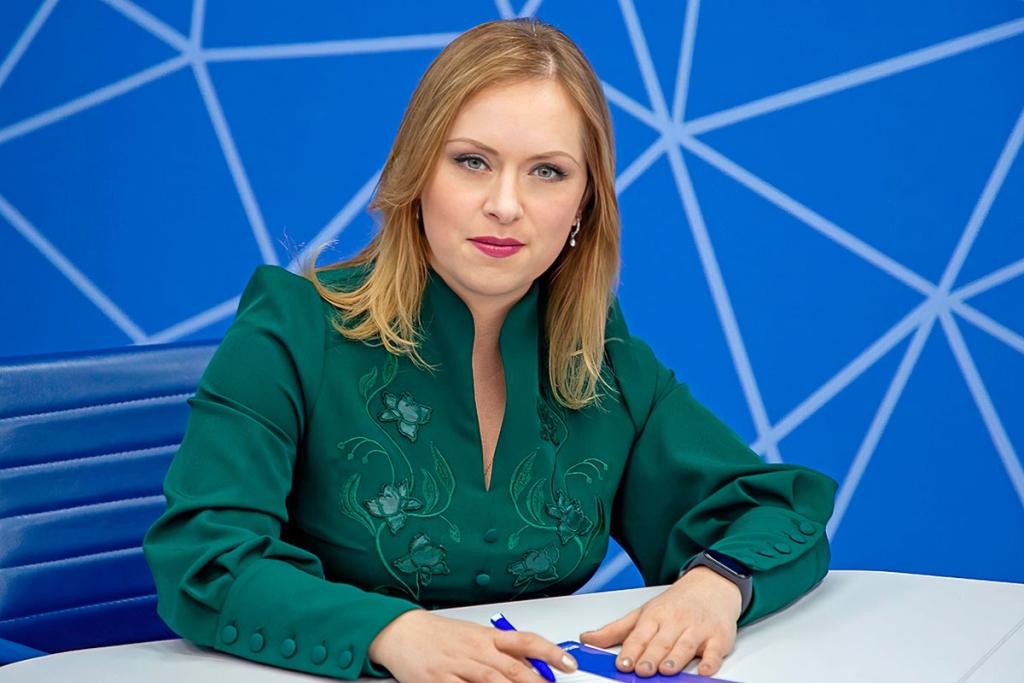
– Ekaterina Viktorovna, the surveys conducted during the thematic year have certainly highlighted how society views the modern Belarusian woman. What image emerges from this data, and do our women still need additional protection from the state?
– Indeed, the main revelation of the initial survey stages was that our women are definitely not perceived as fragile or vulnerable. In citizens’ perceptions, they are independent, well-rounded, purposeful, and active individuals. The image is very strong.
Initially, the year’s theme was partly perceived as if women needed protection, but that is not the case. Women do not expect additional protection from the state; rather, they seek new opportunities to realize their boundless energy. For example, there is a strong demand to remove restrictions on hazardous working conditions. Women also aspire to enter high-paying industries, particularly in the STEM field (science, technology, engineering). They see no barriers for themselves and want employers to evaluate their health and competencies, not their gender. They propose launching special state training programs, grants, and scholarships specifically for women to facilitate their entry into STEM.
– Speaking generally about economic equality and employment – legally, we are all equal. But what do women say specifically: do they still encounter certain stereotypes in practice?
– The global trend is economic independence. A woman inherently feels equal to a man, is ready, and strives to support her family independently. However, according to women, they continue to face stereotypes from employers, which acts as a barrier. Employers’ skepticism remains a common motive: if a woman is young, she will likely get married, take one maternity leave, then another. Women believe that for these reasons they are sometimes underestimated, especially when selecting candidates for management positions. In this regard, survey participants propose legally prohibiting any questions about marital status or children during hiring, making this information confidential. It is even suggested to introduce liability for employers for such biases and to launch a state monitoring system for wage equality between men and women in identical positions with equal responsibilities. Of course, labor legislation currently guarantees equal rights for everyone. But women suggest specifying concrete control mechanisms in the law.
– Nevertheless, moving on to the topic of supporting motherhood, the possibility of flexible schedules for working mothers is often discussed in society. What exactly do women want from employers in this regard?
– They propose measures that employers can easily afford without harming production: varying the start and end of the workday, shifting lunch break times so that they, for instance, have the opportunity to pick up a child from school. They also ask for a system of time off and hourly absences – for example, for medical check-ups with a child – with proportional recording and payment.
– Do women on the platform talk about the fear of “falling out of the loop” during maternity leave?
– Responses often use the phrase “penalty for maternity leave.” Women mean that by taking parental leave, they are not only practically limited in career growth but also risk losing their competencies. Plus, there are certain difficulties with a subsequent “seamless” return from maternity leave, not to mention changes in the family’s financial situation.
Different approaches are proposed here. For example, one option is to split maternity leave payments into parts. The first part would have the highest payments, gradually decreasing thereafter. The burden on the budget remains the same, but for a woman, money “now,” when the child is just born, is worth more: she needs to focus on health, and an infant is inseparable from the mother in the first months of life. Later, when the baby grows up, the woman might be able to take on some side work.
There are also opinions that the burden on mothers should be reduced and the role of fathers strengthened. People propose introducing a paternal quota, similar to Scandinavian countries, where a father is assigned a specific period of months that he must necessarily spend on parental leave.
This issue has not yet been formalized at the legislative level in our country, but the question of changing maternity leave payments was discussed at a meeting with the Head of State. Our “People’s Five-Year Plan,” like a litmus test, shows that this is a stable trend in society. The Ministry of Labor and Social Protection has already initiated a review of the payment procedure. This directly correlates with citizens’ proposals, and the Head of State generally supported this approach for further development. Experts are currently calculating the social and economic consequences.
– Another difficult topic is the collection of alimony. Often, fathers pay pennies just to avoid criminal charges…
– A very large volume of proposals was received regarding alimony. In cases like the ones you mentioned, where enforcement proceedings are ineffective, citizens propose creating a state alimony fund. The essence of the idea: the fund monthly pays the woman the due amount, and then the state collects this money from the obligated person in the established order.
Women also propose not limiting alimony payments to the child’s majority. By the way, deputies of the House of Representatives are already discussing this issue with citizens, and it is being thoroughly worked out in the expert council of the Council of the Republic.
– Belarus has built a powerful system of support for large families. But how do those with one or two children, or single mothers, assess the situation? Do they feel left out of housing programs?
– Yes, such a message exists. People write that the state directs huge resources to large families and directly note that irresponsible families exploiting state care are found among them. It should be noted that people’s requests – where they would like to build, choose an apartment or a private house, how to develop the rental housing stock – clearly align with the messages voiced by the Head of State at specialized meetings. People actively propose mechanisms for converting rental housing into ownership with the option to buy out. They are ready to build private houses with their own efforts but ask the state to provide development territories with ready infrastructure – roads, utilities, kindergartens. The main criterion here is not subsidies, but increasing personal solvency with adequate and stable housing prices. The tasks set by the Head of State for responsible agencies at meetings clearly meet public demand and are supported by people.
– What initiatives are coming to the platform regarding support for families with children or elderly relatives?
– People actively raise these topics. For example, a sensitive issue is assistance to families raising children with disabilities or having elderly bedridden relatives. They urgently need a “social respite” service to avoid placing relatives in nursing homes. For this, citizens ask to develop a state service of verified, certified nannies and caregivers with hourly payment, so that a reliable specialist can be invited for a few hours.
Other proposals are also heard: creating regional clubs for young parents, “free grandmother” services through digital apps, and organized platforms for exchanging children’s items. The main criterion is that people want the state to oversee all these services.
– An interesting idea is the “free grandmother” services and sharing of children’s items. But why do people insist that these should be handled not by private startups or volunteers, but specifically by the state?
– This is a marker of immense trust: if the process is controlled by the state, it means there will be no fraudulent schemes or hidden threats. No one will leave a child with strangers from the street, whereas the state guarantees safety, reliability, and comfort.
– Ekaterina Viktorovna, if we summarize this colossal array of data, what is the main conclusion that can already be drawn? What do Belarusians expect from such a large-scale project as the thematic year?
– This initiative of the President is perceived very positively by the population. Our measurements show: society has consolidated its demand for the thematic year to result in a concrete, effective package of measures. Through the Year of the Belarusian Woman, we essentially conducted large-scale public hearings on the widest range of topics. The main conclusion we convey to decision-makers is that the focus should be on the targeted nature and effectiveness of measures. These are the two key criteria by which people evaluate and will evaluate the state’s work.
Natalya KOVALEVA
Photo from open internet sources
Source — 1prof.by


