
Microelectronics: growth driver and attribute of technological sovereignty
Enterprises of the Union State have significantly strengthened in production and research terms; therefore, they are capable of producing any industrial, military and space products
At the end of January, President of Belarus Alexander Lukashenko visited Planar OJSC. This enterprise is one of the leaders in the production of electronic components in the CIS. The Head of State noted: “It was here, at Planar, in the 60s of the last century that the brain and heart of microelectronics of the Soviet Union was created.”
Planar OJSC is not just a manufacturer of microelectronics products, but a full-fledged modern scientific and technical complex, which, based on current technologies and the synthesis of scientific and technical achievements, ensures the development and supply of specialised equipment for the implementation of technologies in microelectronics. It was as part of the development of the research and production component that during the President’s visit, the Center for Special Technological Equipment for the production of photomasks and micro-optics was solemnly launched.
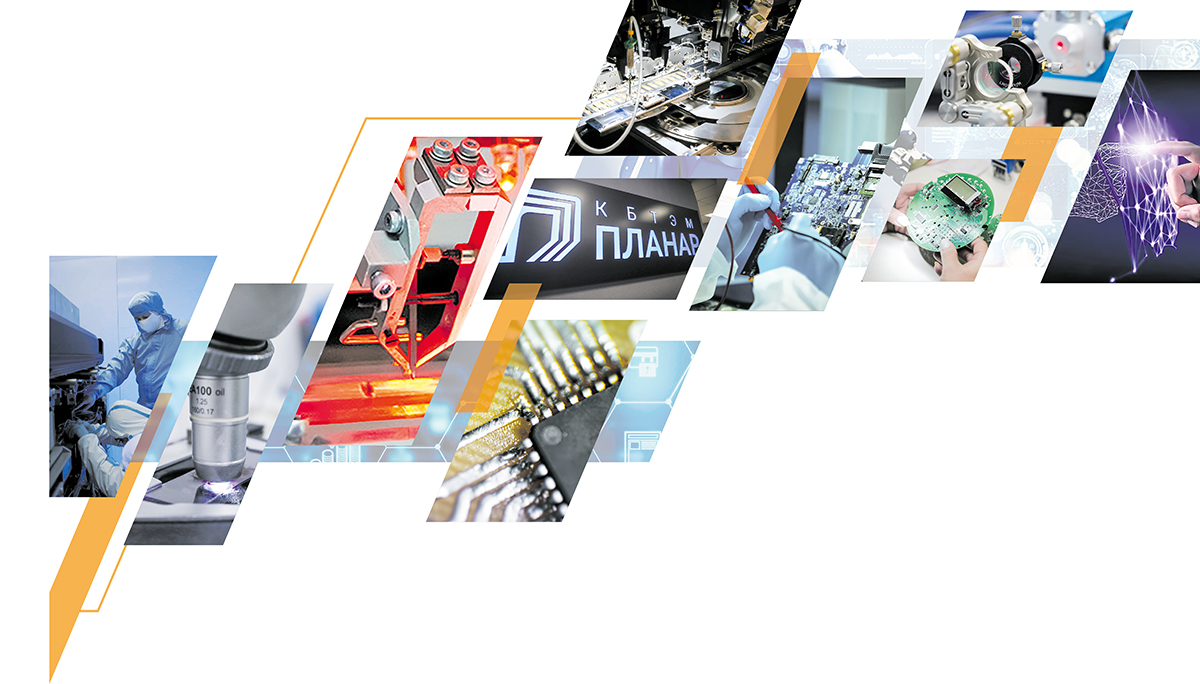
Landmark is a more complex technological level
The effective operation of this Center should provide production capabilities for the issue of 90 nm products (photolithographic equipment and equipment for the production of photo masks), which are now in great demand on the market as a component of modern electronic engineering equipment. Of course, this will expand the space for our own scientific research and its practical application. There is already a prospect for the implementation of projects to transition to a more complex technological level (65 nm).
This will be facilitated by the continued investment activity of the enterprise, aimed at expanding production capabilities through the acquisition of modern equipment and the introduction of advanced technological processes. The guideline is to provide manufacturers of popular and modern microelectronics products with optical-mechanical, control, measuring and assembly equipment of the appropriate technical level.
The systematic development of Planar OJSC as a local center of specialised competencies meets global trends in microelectronics. What are they like today?
Demand for microelectronics in the world is growing
Microelectronics is a field of electronics that deals with the study and creation of small-sized electronic devices, integrated circuits, microprocessors, microsensors and other elements. The key areas of consumption in the world are telecommunications, computing infrastructure, transport, machine tools, and consumer devices.
At the end of 2024, the global microelectronics market has grown to almost $550 billion (according to analysts at Acumen Research and Consulting). The greatest demand for microelectronics products in the world is generated by the USA, China and the countries of the European Union.
Microelectronics is an indispensable component of finished devices. As a result, there is a trend towards expansion in different planes — an increase in both the total number of devices using microelectronics and the number of electronic components used in one device.
Among the key factors that will influence the development of the global microelectronics market until 2030, subject matter experts highlight:
• an increase in the overall demand for microelectronic products as indispensable components of modern devices. According to TechInsights, the share of electronic products in the cost of the final product has almost doubled over the past 20 years, exceeding the level of 35 percent;
• development of new technologies (AI, 5G, IoT, cloud computing and others), growth of products using artificial intelligence, as well as increased demand for services for storing, analysing and transmitting big data;
• development of local infrastructure for the production of microelectronics by individual countries (USA, EU, China, India, Russia and others) in order to form their own resource base in this strategic direction (reducing dependence on global conditions and associated risks of shortages);
• a gradual technological transition of the world energy sector to renewable energy sources, which creates an increased demand for solar and wind power plants (their electronic components), an increase in the share of electric transport in both the consumer and commercial segments;
• increasing government support for the industry at the national level in major world centres of microelectronics (such as the USA and China) and in breakthrough local centres (India, Brazil, Saudi Arabia, UAE);
• evolution of technology in the field of transport — development of self-driving and other systems. Cars are equipped with a large number of various on-board systems that require high-speed data processing and information exchange in real time;
• technological advances, which include the miniaturisation of electronic components and the use of improved manufacturing processes. There is a shift towards the issue of products with reduced energy consumption. In particular, the use of nanomaterials and nanocomponents makes it possible to create more compact devices with reduced energy consumption. Increased use of advanced materials (in particular, gallium nitride in power, radio frequency and optoelectronics, silicon carbide (SiC) in power electronics) and research into the applicability of two-dimensional materials (for example, graphene), diamond, etc.;
• integration of artificial intelligence into the design and production of microelectronics devices. Companies are increasingly using AI to design microcircuits and control production processes, calculate new packaging methods, and develop physical and logical principles: qubits, neuromorphic computing, integrated photonics;
• introduction of quantum technologies. Global market leaders are busy creating quantum computers capable of solving complex problems. It is expected that in the future, quantum systems will make it possible to make fundamental breakthroughs in various applied industries.
Experts consider high costs of research, design and production of modern microelectronics as limiting factors (large capital investments limit the range of innovative organisations); disruptions in supply chains (raw materials and components) due to geopolitical factors; strictness of regulatory requirements in terms of safety, environmental protection, certification.
In the period until 2030, the greatest demand for microelectronics in the world will be in, first, computing infrastructure, due to the growing demand for equipment for storing, processing and transmitting data, including through the multi-format introduction of artificial intelligence into processes. Second, transport through the introduction of smart systems and assistants, as well as its electrification. Third, industry through the digitalisation of the production process as part of the transition to industry 4.0 and 5.0.
It is important to note that the global production capacity of the microelectronics industry is characterised by a relatively high concentration of players: the top five suppliers account for about 40 percent of the global market (by revenue).
At the same time, in order to increase operational efficiency, such companies ensure geographic diversification of their activities, which contributes to the formation of local centres of competence in individual countries.
The world’s largest centres for the development of the microelectronics industry are the USA, China, South Korea, Japan, Taiwan, and the EU. At the same time, Taiwan and Japan are the largest countries in the manufacturing, assembly and testing segments, whereas the United States is the leader in the design and development segment. The most large-scale construction of new facilities on the horizon until 2030 is planned in Taiwan, the USA and South Korea (more than 20 new production sites are expected to be commissioned).
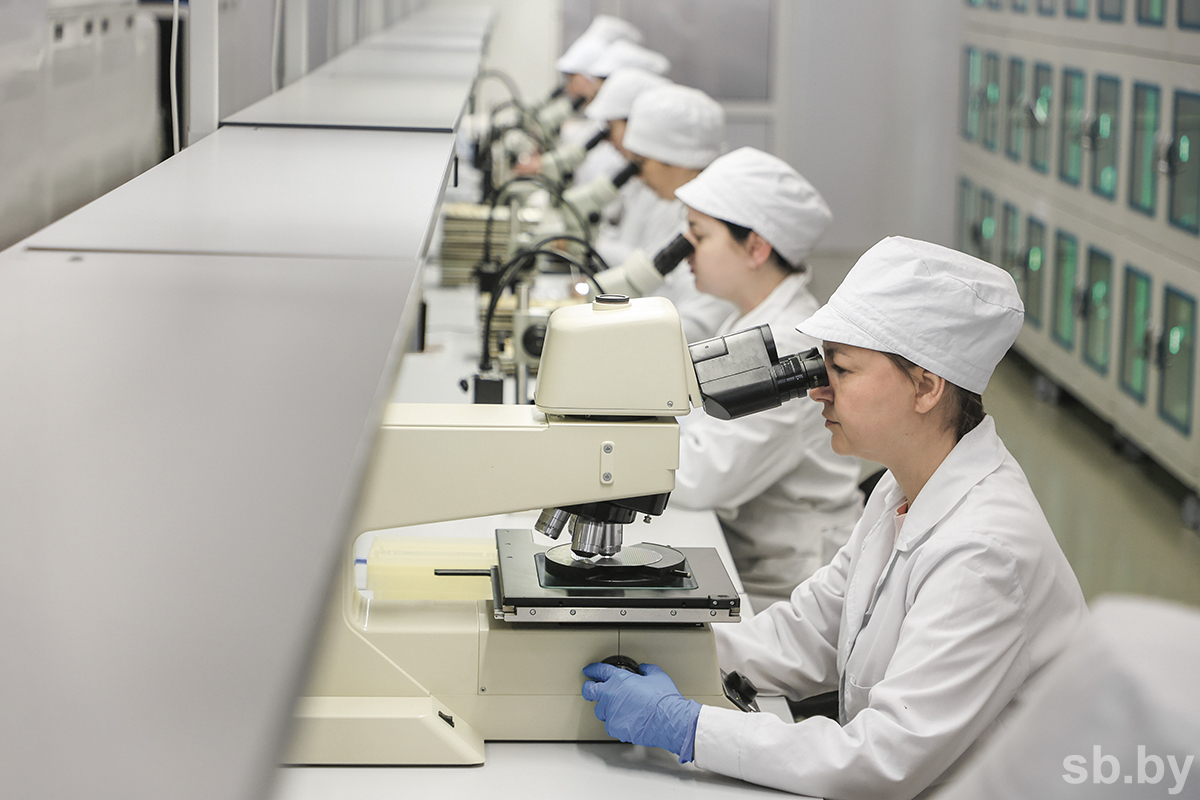
Localisation trend
Despite the geographic diversification of the industry, there is currently a trend towards sovereigntisation (localisation) of the infrastructure for electronics production in individual countries and regions in order to reduce dependence on global conditions. The Russian Federation is no exception, actively working in this direction in alliance with the Republic of Belarus.
The Russian market for microelectronics products has been demonstrating steady and intensive growth over the past five years — an average of 20-25 percent per year. This dynamic development was due to the digitalisation of the economy and consumer behaviour. The use of digital solutions has increased during the pandemic due to the need for remote communication and rapid transfer of information.
The key factors influencing the development of the microelectronics market in Russia until 2030 (in addition to global technological trends) are: the general dynamics of macroeconomic development and the state of affairs in the main industries — consumers of products; active development of import substitution processes and principles of national security (sovereignisation); enhanced government support for the industry, scientific developments and project activities at the national and interstate levels, primarily within the Union State.
Currently in Russia, the main demand for microelectronic products is provided by industry (about 2/3 of the entire market, which is significantly different from the global structure of microelectronics consumption), including urban infrastructure and housing and communal services. Lower demand from key segments (in the global structure) — computing infrastructure and telecommunications — is explained by the low level of localisation of production in these areas.
The development of the microelectronics market in Russia on the horizon until 2030 will be ensured by deepening the level of localisation of production in industries consuming microelectronic products, as well as the implementation of investment projects. This includes such ambitious ones as the national production of smartphones and tablets, smart home devices, localisation of switches and base stations. All these projects are aimed at modernising and expanding production in the field of microelectronics with the active support of the state as part of the import substitution strategy.
It is expected that in the current five-year period, the Russian microelectronics market will grow by an average of 15 percent (with an average global growth of 7 percent (according to Acumen Research and Consulting) to 8.5 percent (Spherical Insights & Consulting) and will approach 800 billion rubles by 2030. Positive dynamics will be ensured by the intensive development of our own production, which will increase the share of domestic products in the market from 20 percent to 45 percent (according to Kept analysts’ estimates).
To maintain the rapid growth rates of Russian production volumes, it is necessary to accelerate the development of microelectronics products, including those produced using basic and advanced topologies (≤ 65 nm) with competitive characteristics and price parameters.
Existing production capacities will not be enough to meet the demand by 2030, especially in the context of a strict foreign policy of restrictions on the supply of foreign components to the market of Russia and friendly Belarus.
To fully cover the deficit, it is necessary to implement all planned projects for the creation and modernisation of production sites both at the national level and within the framework of integration cooperation (primarily through the Union State).
In general, the sustainable development of the microelectronics industry requires the implementation of a balanced government policy:
• determining priorities for technological development;
• expanding long-term contracting mechanisms for microelectronics manufacturers to support long-term investments;
• maintaining industry support/regulation mechanisms with an emphasis on technological development and scaling;
• creating research and production sites for the integrated development and testing of technologies, equipment and materials.
Microelectronics enterprises located in Russia and Belarus have grown significantly stronger in recent years, both in production and in research and development. Now it is already possible to develop and produce any industrial, military and space products: processors, microcontrollers, power electronics, radiation-resistant microcircuits, microcircuits for radio communications, GLONASS (Global Navigation Satellite System) and radar systems.
There is no “outdated” production in microelectronics; products, by any standards, have their own market and price. Even Soviet factories still operate for export, producing power chips and discrete elements (power transistors and diodes), which are widely used in computer motherboards, cell phones and other devices under well-known foreign brands.
Andrey MISHIN, BISR analyst