
When the traditions come into fashion
The world is changing; mass consumption gives way to the new reality, the “impression economy”. People today buy not just goods, but also “senses”, “stories” and “personalised experience”. Namely in this specific context, the concept of “creative economy” arises, i.e. an area where art meets technologies, culture meets business, traditions meet innovations, and the intellect, imagination and cultural code become the main “capital”.
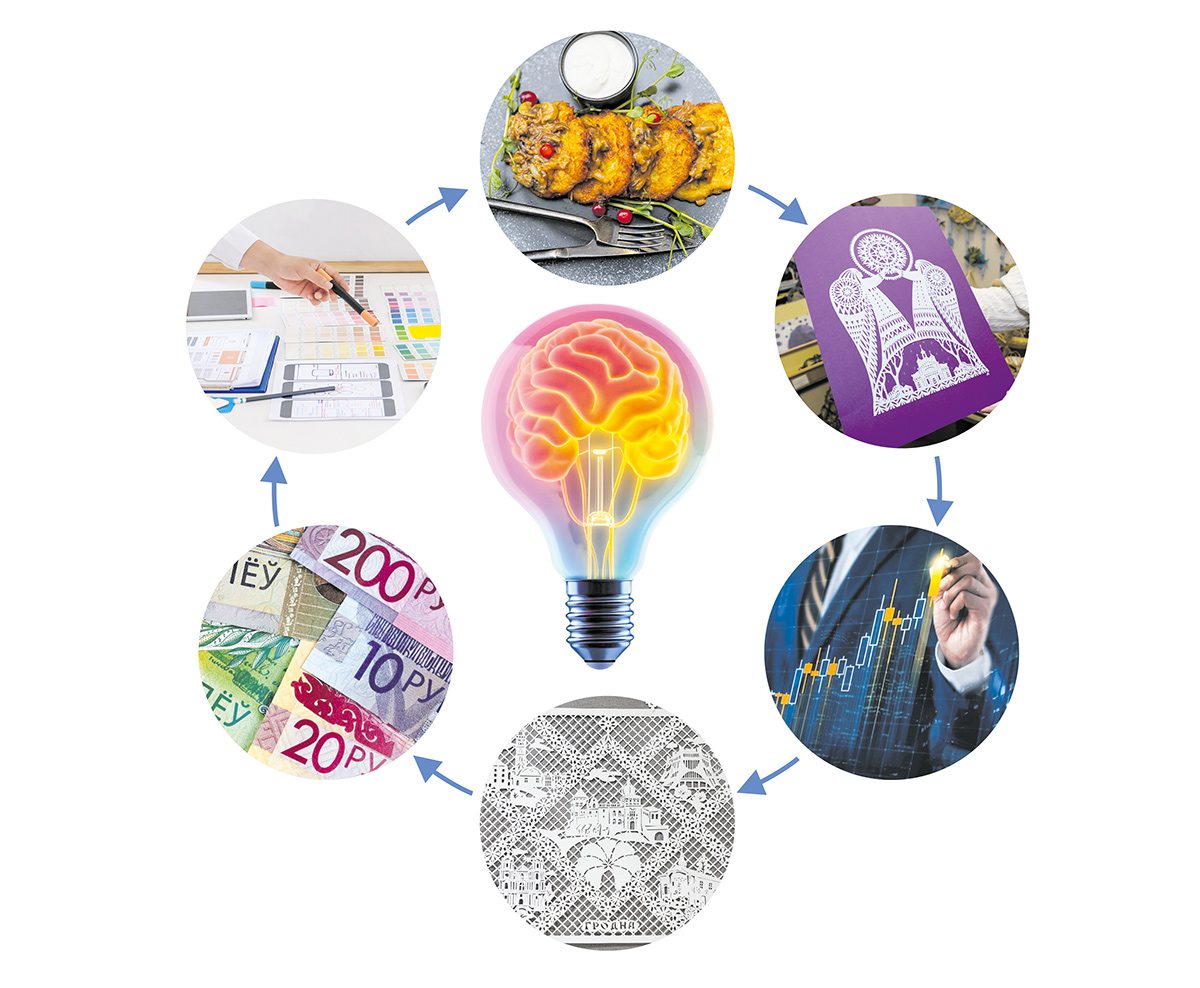
Impression economy

In simple words, at the input, we have the talent and an idea, at the output there will be the product of “talent industry” protected by copyright: from the mobile application or dress design to the architectural project with unique qualities.
This paradigm shift elevates the regional differences and the national identity to the status of the new competitive advantage. Our cultural traditions and crafts that adapt to the advanced developments and design through the combination with modernity get the “fresh breath”. For example, the Belarusian Vycinanka (the paper-cut art form) recognised by UNESCO in 2024 grows in popularity, especially for the younger generation. Its ornaments are transferred to the clothes, tote bags, kitchenware and accessories making it a part of the interior and fashion.
The Belarusian second bread — potato — appeared on the international stage: the local specialists are working today on the national study “Grated Potato Dishes: the Traditions of Cooking and Consumption in Belarus” for including it into the UNESCO Intangible Cultural Heritage List.
This reveals the core: the traditions will not disappear; they will become a part of progress. The main thing is to speak the language of the new generation and to unite both worlds: to preserve the roots carefully and march ahead fearlessly.
Even today, we are able to see the results of the creative approach around us. In particular, there is a restaurant concept around the Belarusian cuisine, which united together more than 20 places for every purse. It is not about only draniki (potato pancakes) and machanka (meat stew) now. The restaurants offer the potato with the herbal ice cream and rye bread lava cake, craft lemonades, and the tinctures made with the help of trendy mixology. Such concept would not only be interesting for a foreign tourist, but it would surprise the native Belarusians as well.
The new formats of interaction with the consumer take the spotlight: shopping malls with the infrastructure for children and adults, coffee shops with the lectures about the coffee history, master classes and tasting events, not just a cake for a celebration but an organisation of a whole event done for you. Every idea becomes a part of a greater story.
There are no simple goods’ selling, the full experience is created: from the brand history to the long-term emotional connection with a client. Such models are already applied throughout the whole world.
For instance, Russia set an ambitious goal: to increase the export of the “creative” products to twelve billion dollars by 2030. It is a sign that the creative economy has already became a strategically important direction of growth for the Russian economy.
Belarusian ideas
The creative economy is not just art, music or design. This is an integrated system that uses the creative potential of people for the solutions of practical problems in different areas.
The most important thing to highlight is an ability of the “talent economy” to charge other economic sectors. It is not only about the net profit when one dollar brings almost three dollars, but also about the deep symbiotic relationship with other sectors. The industry receives a boost from the industrial design. The agriculture transforms due to the branding of the local products and rural tourism development. The science becomes more available due to the visualisation of data. The education enriches with the gamification that makes the studying process much more interesting and captivating.
The technological sovereignty of our country is at the top among the prior directions and tasks in the economy for the new five-year cycle today. In the Message to the Belarusian People and the National Assembly at the end of the last year, the President of Belarus Alexander Lukashenko emphasised, “The country needs the projects based on the developments and discoveries of our domestic science and industry schools!”
The Belarusian microelectronic industry received the ambitious goal: “to run half of a step ahead” and to release the production that is in demand in the world.
Beyond the development of the traditional critically important areas (robot engineering, machinery, electronics), the strategic role in this process of the less obvious but at the same time more profound force — the creative economy — should not be disregarded. It is an innovative resource for generating the environment for the technological breakthroughs, it creates the unique tangible and invisible assets and strengthens the stability of the country.
As the American film director Joel Schumacher said, “the best way to solve a problem is to make it more humane.”
That is how the creative economy works: it makes technological progress more responsive to a man, culture more accessible and society richer in its inner life. That is the place where Belarus can gain its voice — sincere, deep, recognisable.
Young people are a heart of changes
The creative sector is open for everyone. The man and his desires, feelings, the ability to express himself through the products and occurrences remain the core element of this ecosystem. Undoubtedly, the young people are the main force of the “experience economy”: they shift easily between the digital world and the reality, they know how to combine the global trends with the established roots. The energy, curiosity, eagerness for experiments and readiness for bold actions (in a good sense) make the young generation the ideal co-creators of changes, allowing them to convey the old values into new forms and make them relevant for the digital era.
However, for the successful development of the youth entrepreneurship, the systematic approach on the level of interaction between the state, business and education is necessary. It should include the accessible education, start-up support, the platforms for the dialogue between the scientists and entrepreneurs.
The creative economy is not just a budget decoration, but a cementing force of the future development. It can bring together the science, culture and business for one goal: to create the unique products and services under the sign of the Belarusian quality.
In other words, the one who offers not simple goods, but the senses and uniqueness, the experience and identity, the fresh story and deep emotional experience wins. In this competition, the main asset is human imagination, and the creative economy is a diamond cut where the imagination gets its market value and social significance.
If Belarus starts to build up deliberately its own version of the creative economy today while using the youth power, the profundity of traditions and the might of digitalisation, then it can take a worthy place among the CIS countries tomorrow, creating a meaningful experience for millions of people.
Volha MATSKO, the BISR analyst