
The meeting of the Head of State with the Ambassador Extraordinary and Plenipotentiary of India to Belarus, Ashok Kumar, has once again brought to the forefront the issue of rebooting bilateral relations with this country, which, as the Belarusian leader previously noted, have “degraded”. Judging by New Delhi’s external activity, today is the most opportune moment for this, and it is important for our diplomacy not to miss it. This view was expressed to a BELTA correspondent by Yuri Yarmolinsky, Analyst of the Belarusian Institute for Strategic Research (BISR) and Head of the Centre for SCO and BRICS Studies.
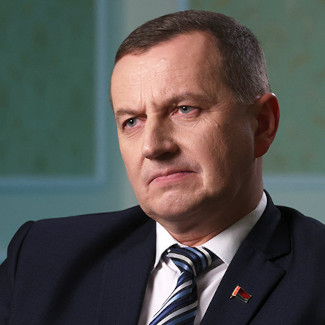
“The growing political and economic weight in global affairs is encouraging India to diversify its foreign policy and international partnerships beyond its traditional alliances and regions that had previously not received due attention. One of the directions that has recently gained prominence is the countries of Central and Eastern Europe, particularly the Visegrad Four (V4),” Yuri Yarmolinsky believes.
According to the analyst, this shift is a derivative of the new concept of Indian diplomacy, the general directions of which were formulated in 2021 by the country’s Minister of External Affairs, Subrahmanyam Jaishankar. Among them are engagement with the United States, the development of relations with Europe, the involvement of Japan, and the expansion of traditional support groups. “Analysts partly link New Delhi’s increased interest in the European region with Subrahmanyam Jaishankar’s diplomatic experience in Hungary (1990–1993) and the Czech Republic (2000–2004). India is also compelled to diversify its export markets due to the trade tariffs imposed by the United States on Indian exports,” the expert stressed.
Yuri Yarmolinsky pointed out that, guided by its economic and geopolitical interests, India is gradually expanding its engagement with the V4 countries. “This likely stems from a broader strategy of securing entry points and subsequent influence in Europe. For instance, in January 2024, a joint statement on a strategic partnership between the Czech Republic and India in the field of innovation was signed. It focuses on such areas as trade, defense, cybersecurity, clean energy, sustainable urbanisation, agriculture and academic mobility. It is important to note that the Czech Republic is the only V4 country that has published its Indo-Pacific Strategy, in which India is designated as a priority partner,” the analyst emphasised.
“The visit of Indian Prime Minister Narendra Modi to Poland in August 2024 led to an upgrade of bilateral relations to a comparable level, with a focus on cooperation in technology, agriculture, mining, energy and environmental protection. In April 2025, the President of India, Droupadi Murmu, visited Slovakia. The changing landscape of global trade is pushing both sides to strengthen economic ties above all. Experts believe that the V4, integrated into Europe’s value-creation chains, may help India bridge its technological gap and accelerate the expansion of its industrial capacities,” Yuri Yarmolinsky noted.
In the analyst’s view, people-to-people contacts are intended to strengthen mutual understanding and the foundation of economic cooperation. “The development of business ties is leading to an increase in the size of the Indian diaspora — New Delhi’s traditional soft-power asset — in the V4 countries (over 50,000 people). Interest from India’s leading academic and analytical centres in Central and Eastern European studies has increased. The Central European Institute of Asian Studies, based in the Slovak capital, in turn calls on Europe in general and the V4 countries in particular to deepen cooperation with India. National-level tourist routes are becoming increasingly popular in Prague, Budapest, Bratislava and Warsaw,” the expert underlined.
At the same time, Yuri Yarmolinsky believes that, despite the interest shown by political and business elites, overall awareness in India of the V4 as a political-economic bloc remains limited, just as the perception of India itself in Central and Eastern Europe, especially among young people.
“The trend of India’s growing interest in the V4 countries — two of which Belarus maintains pragmatic and constructive relations with — opens a window of opportunity for strengthening Belarus–India relations as well. The willingness expressed by the President of Belarus to host Prime Minister Narendra Modi in Minsk, the intention to work together within BRICS during India’s forthcoming chairmanship, the recent eighth round of consultations on general political issues between the foreign ministries, and the visit of India’s Deputy Foreign Minister Sibi George — all these are positive signals and steps in the right direction,” the analyst believes.
At the same time, the expert is convinced that success in achieving these declared goals will largely depend on our ability to support rhetoric with resources, flexibility and strategic patience at the implementation level. “These are fundamental competencies when working with India. Experience with the V4 countries shows that New Delhi views any international partnerships through the prism of its national interests. Therefore, the future strategy of Belarus–India relations must be pragmatic and based on one or two strategic economic projects that are of primary interest to the Indian side. Only such an approach will allow the gradual building of a reliable, stable and future-oriented partnership. Otherwise, it will remain merely an act of symbolic diplomacy,” Yuri Yarmolinsky emphasised.
Moreover, any strategy will only be effective if it is grounded in deep and comprehensive knowledge and understanding of India’s counterparts. “And to achieve this, they must be studied systematically. The inertia of the past is gone — the Soviet experience of engagement with modern India is no longer applicable. Therefore, to address this task, the Belarusian Institute for Strategic Research, together with its partners, is launching a special mechanism: a permanent expert dialogue ‘Nemiga – Yamuna,” the analyst concluded.