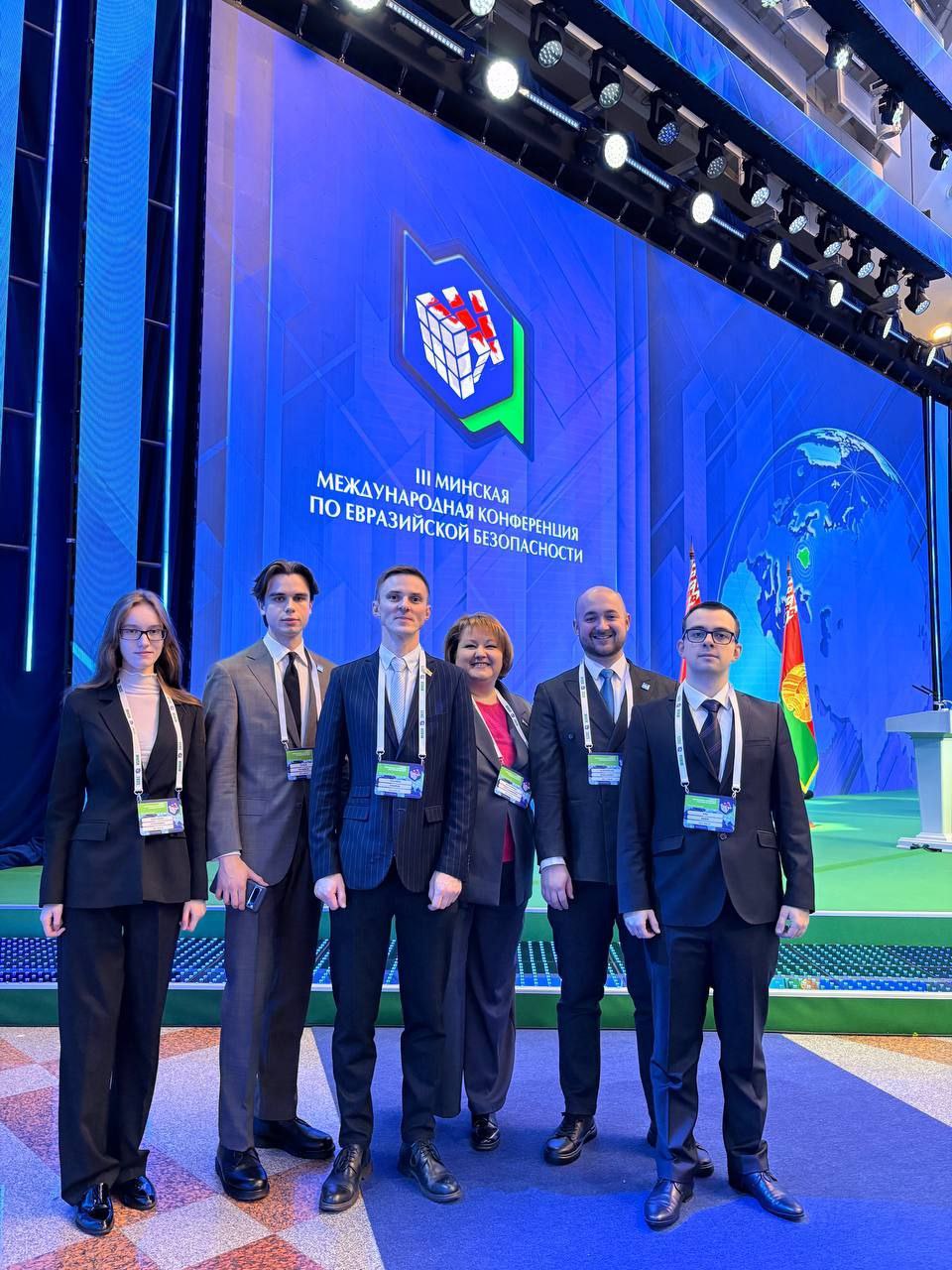
The capital of Belarus hosted the 3rd Minsk International Conference on Eurasian Security, which confirmed its status as one of the key independent platforms for strategic dialogue in a rapidly changing world. The event, which gathered leading experts, politicians and diplomats from more than 45 countries, became a barometer of profound shifts in the global security architecture. Members of the youth analytical movement of BISR and of the public association “Youth Analytical Community” took part in the work of the conference.
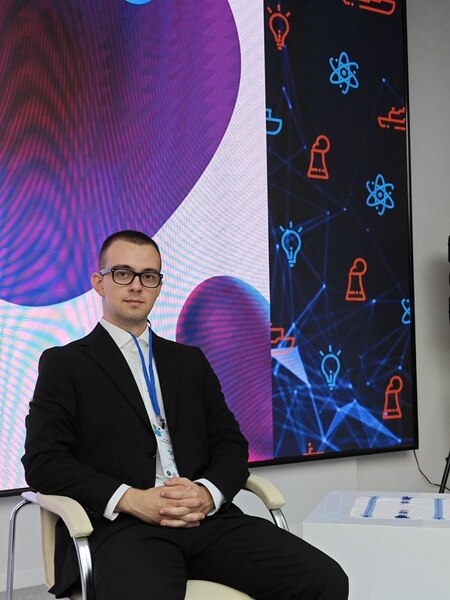
“The main thesis of this conference was the need for dialogue in the name of peace across the Eurasian space, because, in its absence, as never before, a nuclear conflict may become entirely real. In this regard, the role of international organisations and associations increases. In this context, proposals were voiced on prohibiting actions against energy infrastructure and on overcoming the migration crisis on the basis of bilateral cooperation,” Yan Koba, a student of the Faculty of International Relations of Belarusian State University, says.
Young analysts highlight several cross-cutting themes that defined the agenda of the conference:
- Security as a comprehensive concept. The focus of discussions was not only the military dimension, but also its close interconnection with economic, food, energy and information security. It was emphasised that the use of the financial system and critical infrastructure as instruments of pressure undermines the foundations of global stability.
- Insolvency of sanctions policy. Participants examined in detail the consequences of sanctions pressure, arriving at the conclusion of its counter-productivity and its “boomerang effect” for the initiators. Successful practices of import substitution, the reorientation of logistics chains and the formation of new platforms for financial settlements not dependent on the dollar system were analysed.
- The Ukrainian crisis: a view from Eurasia. The conflict in Ukraine remained one of the most acute topics, yet its discussion in Minsk differed fundamentally from Western rhetoric. The emphasis was placed on root causes — the primary factors of the crisis — including the non-implementation of the Minsk agreements, NATO enlargement and the support of nationalist forces. Many speakers pointed to the need for a rapid transition from military actions to the stage of political and diplomatic settlement.
- Information wars as a new theatre of hostilities. Experts discussed the total nature of information confrontation, in which Western media giants are used to create a one-sided picture of the world. In contrast, the importance of developing sovereign information resources and communication systems was noted.
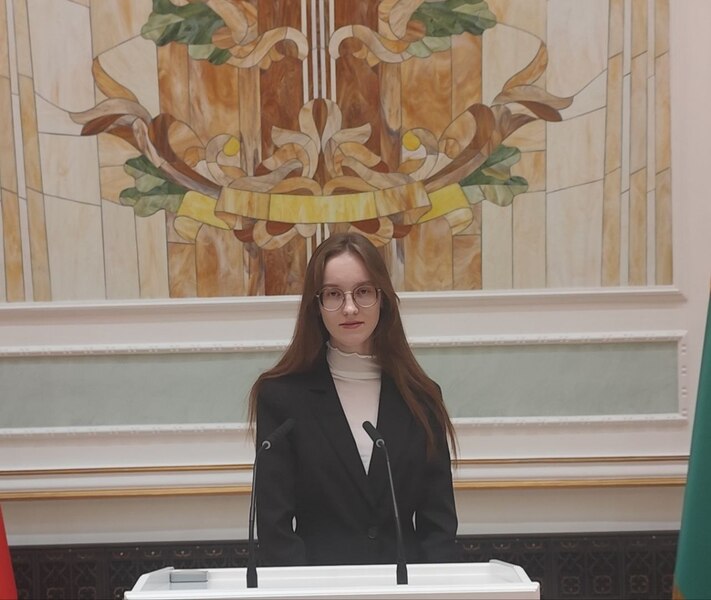
“International organisations and scholars devote significant attention to the problem of terrorism and are actively undertaking steps aimed at developing and improving legal measures to combat it. The accuracy with which the causes will be established will determine the effectiveness of the measures adopted and their further refinement,” – Anastasiya Chernobai, student of the Belarusian State University of Culture and Arts, says.
The holding of a high-level conference in Minsk became yet another confirmation of the strategic role of Belarus as a responsible and independent participant in Eurasian security. Despite unprecedented external pressure, the country demonstrates its ability to be not a “buffer zone”, but a fully fledged actor in international politics, offering a platform for complex but necessary dialogue.
The 3rd Minsk Conference on Eurasian Security did not offer simple solutions, yet it clearly outlined the contours of a new reality in which Eurasia is destined to play one of the key roles.