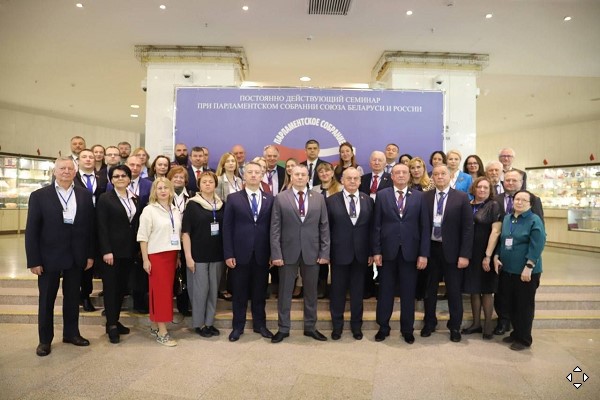
The analysts Iryna Rusak and Siarhiej Zhuk took part in the 83rd session of the standing seminar of the Parliamentary Assembly of the Union of Belarus and Russia on the topic “The Development of Rural Territories in the Union State: Actuality and Prospects for Development” and delivered the report “On the Social Condition of the Residents of Rural Areas of the Republic of Belarus: BISR’s Perspective”
Within the framework of the BISR project “The Future of Rural Areas,” various options for the development of agricultural territories are deeply studied based on new economic and social realities. At the present stage, the core of the development of rural settlements is a special unique lifestyle that is attractive to various social groups. A modern “village of the future” should be a rural agglomeration designed to accommodate various social and economic groups: indigenous rural residents, city dwellers who have moved for permanent residence, young professionals — distance workers and other categories of citizens who would complement each other and form an environment for the sustainable development of territories.
“Several key trends for the future of rural areas are highlighted: the development of transport, industrial and social infrastructure, changes in quality of life standards, the formation of new cooperative ties in agriculture, a request for the involvement of the population in the life of the local community, and a new look at the state — as a partner in creating conditions for the self-fulfilment of a Belarusian. Thus, the image of the rural area of the future is not a “miniature city”, but an independent model based on unique advantages. The above-mentioned trends are forming a new ecosystem that is attractive to both indigenous residents and active city dwellers who choose a suburban lifestyle,” Iryna Rusak highlighted.
“Residents of rural settlements in the Brest region see the development of tourism as one of the growth points in the social and economic progress of the region. More than 60 percent of respondents consider their territory potentially attractive for tourists. Respondents identify a number of natural, historical, cultural, museum and event points of attraction (Białovieża Forest, castles and old manors, unique nature reserves, authentic festivals), which can become the basis for the formation of recognisable regional brands. The development of tourism based on these objects is considered by the population as an important impetus for the local economy — through the creation of jobs, the development of services and infrastructure, which ultimately strengthens the positioning of rural areas and increases their attractiveness for life and investment. More efficient use of their potential could be facilitated by increasing the transport accessibility of points of attraction, developing the infrastructure for receiving tourists (hotels, campsites, food service), and training qualified personnel for the industry,” Siarhiej Zhuk added.
At the end of the discussions, the seminar participants approved the draft of the final Recommendations. The document includes a set of measures addressed to the Council of Ministers of the Union State, relevant ministries and departments of the two countries.