
The final of the III Republican Youth Contest of Analytical Projects and Research was held in the capital on April 23, the reporter of the “Minsk-News” agency informs.
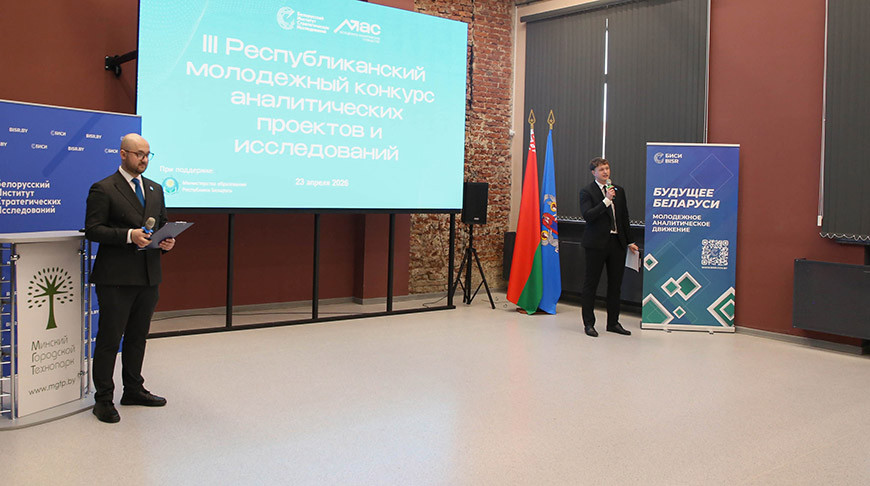
The main directions for the contest works this year included ecology, tourism, urbanisation, media, digitalisation and artificial intelligence, as well as development of villages and small towns.
“This year we have our own records broken — we collected 121 applications from all the regions of Belarus, there were more than 250 people in total wanted to participate in the contest, many of them organised the teams,” coordinator of the “Future of Belarus” Youth Analytical Movement, BISR analyst Jawhien Kharuk revealed. “There is a perception that the first aim of providing the youth with the new platform for thinking and demonstrating their own view of the development of the country has been completed. Today, our young analysts conduct the analysis, estimate the tendencies and write the research.”
According to Ja. Kharuk, there were 43 projects (70 people) who made it to the final. On Thursday, 39 of them were presented — some teams could not come, unfortunately. All the finalists received the invitations to participate in the Young Analyst Summer School that will be held in August.
“Today, the students showed what they are capable of, and later we will teach them and receive the final products ready to be implemented in the economy,” the BISR analyst highlighted.
Director of BISR Alieh Makaraw pointed out that number of the applications to the contest is gradually increasing. He named raising the quality of final projects as the main task.
“We are planning to be able to convey these projects to the practical implementation. Sure, the youth movement is about people first of all: these students are important for us, their motivation and concernments are important. We created the youth movement to unite the “veterans” of these contests, to gather together the ones who are interested in thinking out the future of Belarus,” A. Makaraw added. “Speaking about the projects, they should be so thoroughly elaborated and arranged by the young people specifically that they could be offered to the country.”
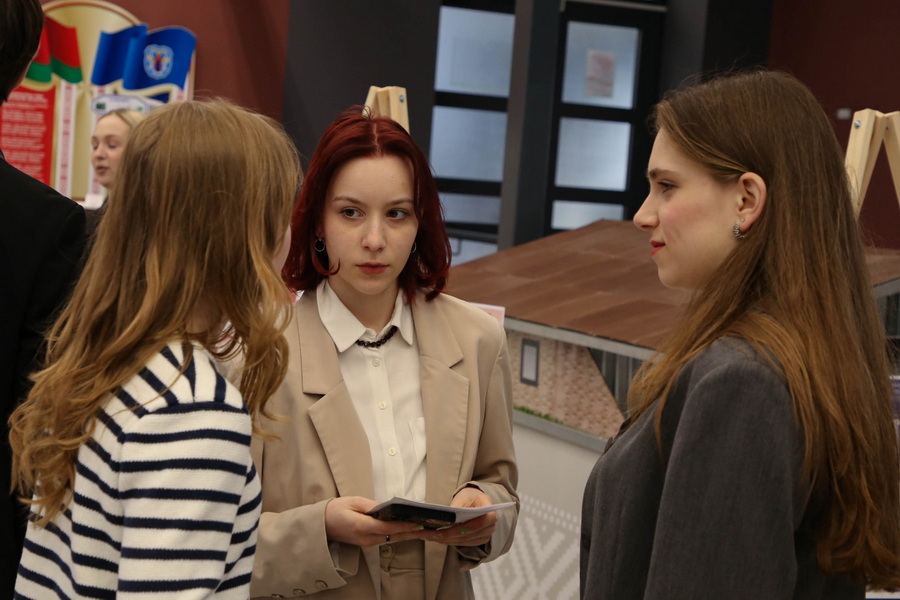
There were presentations of the project materials and an awarding ceremony in the final of the contest. The works were exhibited as special stands, and top five were demonstrated on the big screen for all the participants and honorary guests during summing up the results.
Students of the Energy Faculty of BSTU Jawhien Shuman and Artsiom Lesoto elaborated on the concept of the development of the cryptocurrency sector.
“Our work is an adaptation of the classic for the cryptocurrency market Markowitz model or the Modern portfolio theory. The cryptocurrency sector is actively developing today in Belarus, the formation of cryptobanks was regulated not long ago. Our concept suggests the effective mechanism of inner budgeting specifically for such organisations as cryptobanks. We determine the risk-free rates of interest, and which can provide the most effective depositary policy in these organisations. To say it short, cryptocurrency banks in Belarus with its help will be able to work more effectively and risk-free.”
Student of the Mogilev State University Darja Lapinskaja analysed why different specialisation were popular among the university applicants in different periods of time in Belarus.
“I conducted complex research on the topic what were the reasons why the particular specialisations became popular. For example, there were many lawyers and economists, who graduated from 2006 to 2010, which was connected to the active transition to the market economy format in Belarus. From 2011 to 2019, the IT specialisations were the most popular, because the Belarusian IT companies entered the world market in this period and became famous. In 2019-2023, the young people strongly focused on the healthcare and psychology. It can be possibly connected with the inspiration caused by the doctors’ efforts in the pandemic period. There has been no special emphasis on a particular specialisation since 2024, the young people stopped chasing after trends, they choose the directions relevant for them. Still, it is possible to estimate that due to the development of AI we will expect the new wave of interest towards the IT specialisations. Perhaps, there will be a high demand for narrow-profile specialists.”
Source: Minsk-News