Precision agriculture is an innovative method in farming that applies advanced technologies to improve crop quality. It encompasses global positioning technologies (GPS), geographic information systems (GIS), yield monitoring technologies, variable rate technologies, remote sensing solutions, and “Internet of Things” (IoT) applications.
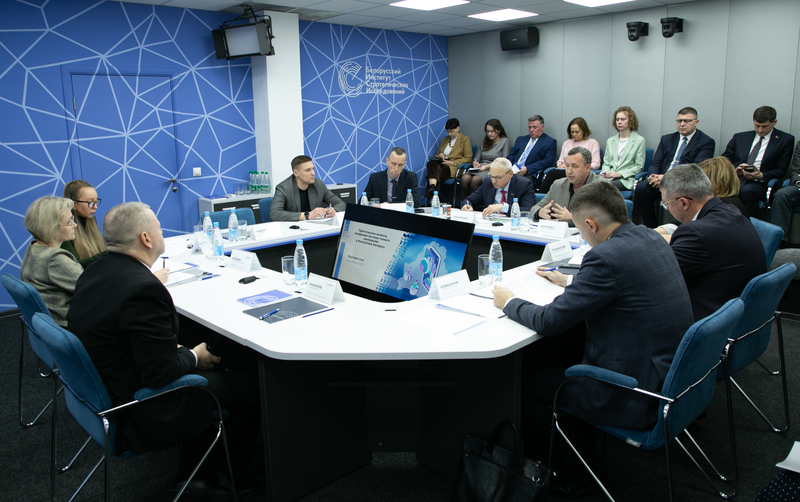
Analysts from BISR, representatives of government bodies and organisations, academia, the High-Tech Park, the National Academy of Sciences of Belarus, the business community, and Belarusian enterprises took part in the discussion.
The event focused on the progress and mechanisms of the digital transformation of the country’s agro-industrial complex in the context of crop farming. Particular attention was given to the key factors influencing the introduction of new technological solutions in agriculture, including the availability of information and communication technologies, data transfer and security, interoperability of digital solutions, and reducing reliance on foreign technologies. To expand the use of best practices, an assessment was conducted of the national developments already introduced within the country’s economic sector.
The event highlighted the following points:
• At this stage, work is under way to establish the baseline framework of the Digital Precision Agriculture Platform as part of the national spatial data infrastructure, including core subsystems and hardware-software complexes. This is intended to ensure a gradual and evolutionary transition towards precision agriculture technologies for agricultural enterprises in the Republic of Belarus.
Participants underscored the importance of an integrated approach and the strengthening of cross-sectoral cooperation. They also stressed the need to accelerate the development of “smart farming”.
• The agricultural sector still retains capacity for the introduction and expansion of new technologies. The decisive factor is no longer the availability of resources alone, but the management of those resources, their rational use, and overall efficiency. Digitalisation automates routine processes, optimises resource use, increases production efficiency through the deployment of precision agriculture, and creates new opportunities for exports and for reducing operational costs.
The expert dialogue also raised issues related to education (digital competencies) and the role of advanced agritechnologies in attracting young specialists to the sector: “For effective digitalisation, technology alone is insufficient; methodology and the human capital capable of advancing these technologies further are essential.”